Durability, hygiene and lifecycle considerations
In industrial dehumidification equipment, the cabinet is more than a structural enclosure. It protects internal components, influences corrosion resistance and service life, and affects how easily the unit can be cleaned and maintained.
Cabinet design and material selection therefore influence both operational reliability and lifecycle cost.
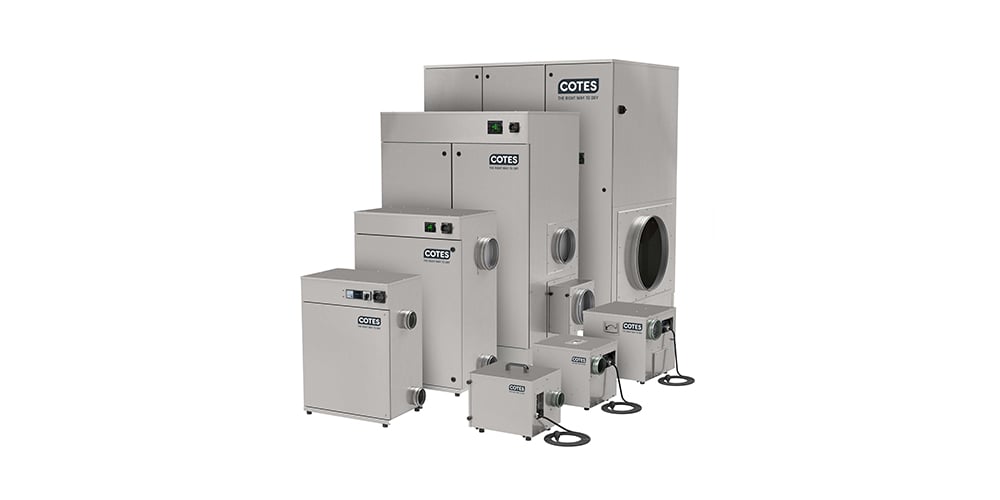
At Cotes, the cabinet is treated as an integrated part of the system design. Material choice and mechanical design are selected to support durability, cleanability and long service life, rather than short-term production optimisation.
Cabinet design: reducing complexity
In industrial equipment, mechanical complexity often increases the number of potential failure points. Hinges, locks, joints and exposed fasteners can introduce areas where contamination accumulates or corrosion begins.
Cotes cabinets are therefore designed with:
- limited use of screws, hinges and locks
- few joints and internal corners
- smooth and continuous external surfaces
This design approach provides several practical advantages.
Fewer joints and mechanical details reduce areas where dust, moisture or contaminants can accumulate. Smooth surfaces make the units easier to clean, which is particularly relevant in environments where humidity control is part of maintaining controlled conditions.
Reducing the number of mechanical components also lowers the risk of mechanical wear and simplifies service work.
The visual simplicity of the cabinet is therefore a consequence of functional design rather than an aesthetic objective.
Material selection: stainless steel cabinets
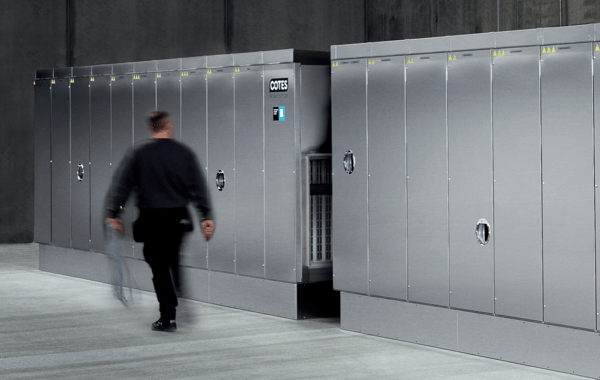
Cotes cabinets are manufactured in stainless steel. The material is selected primarily for corrosion resistance, durability and maintenance characteristics.
Corrosion resistance
Industrial dehumidifiers frequently operate in humid environments. Stainless steel provides corrosion resistance without relying on a protective coating.
Unlike painted surfaces, corrosion protection does not depend on a paint layer that may degrade, crack or be damaged during operation or service.
This helps maintain mechanical protection of internal components over long operating periods.
Cleanability
Stainless steel has a smooth, non-porous surface that tolerates cleaning agents and mechanical cleaning without surface degradation.
Combined with the simplified cabinet design, this supports cleaning procedures in installations where hygiene and controlled conditions are required.
Maintenance requirements
Stainless steel cabinets do not require repainting or periodic surface treatment. Maintenance is typically limited to inspection and cleaning.
This reduces:
- maintenance work
- use of coatings or chemicals
- downtime related to surface repairs.
Lifecycle considerations and material impact
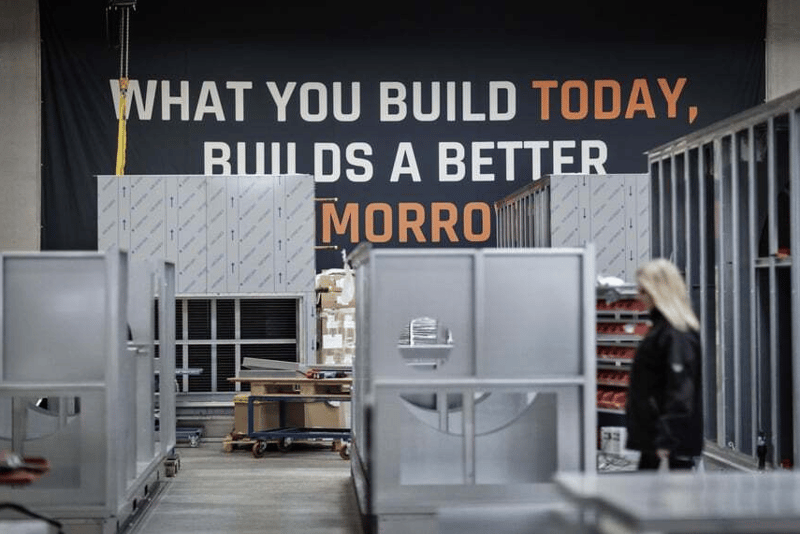
Material selection also affects environmental impact across the product lifecycle.
Stainless steel production requires more energy than many coated sheet materials, mainly due to alloying elements such as chromium and nickel. When evaluating cabinet materials, however, production impact is only one part of the lifecycle assessment.
Key factors typically include:
- production energy and emissions
- operational lifetime
- maintenance requirements
- recyclability at end of life.
Production phase
Painted steel and painted aluzinc generally have lower initial production emissions.
Stainless steel production requires more energy but avoids paint systems, solvents and surface treatments.
Operational lifetime
In humid or aggressive environments, stainless steel cabinets typically maintain structural integrity longer than coated alternatives.
Painted materials depend on the condition of the coating and may require repair or repainting if the protective layer is damaged.
Maintenance requirements
Stainless steel surfaces normally require only cleaning during operation.
Coated cabinets may require periodic surface repairs, repainting or replacement of damaged panels.
Recyclability
Stainless steel has a high recycling rate and retains most of its material properties when recycled.
This supports reuse of the material in new steel production.
Design and material working together
Cabinet performance is determined not only by material choice but also by mechanical design.
By combining:
- stainless steel construction
- smooth external surfaces
- limited mechanical components
Cotes cabinets are designed to support:
- long operational lifetime
- low maintenance requirements
- straightforward cleaning procedures
- high recyclability at end of life.
Reducing the need for replacement parts, repainting or cabinet refurbishment can significantly influence the overall lifecycle impact of industrial equipment.
Conclusion
Cabinet design and material selection influence reliability, maintenance requirements and environmental impact over the lifetime of industrial equipment.
Stainless steel cabinets require more energy during production, but their corrosion resistance, durability and recyclability can provide advantages when evaluated across the full lifecycle of the product.
The simplified stainless steel cabinet design used in Cotes dehumidifiers is intended to support long service life, low maintenance demand and consistent performance in demanding environments.