Product Images Website CWO65-min
WebSite Product Images 1000x1000 CWO65
Product Thumbnail 1000x1000 How CWO works
Product Images Website CWO65-min
WebSite Product Images 1000x1000 CWO65
Product Thumbnail 1000x1000 How CWO works
Cotes Wind Overpressure

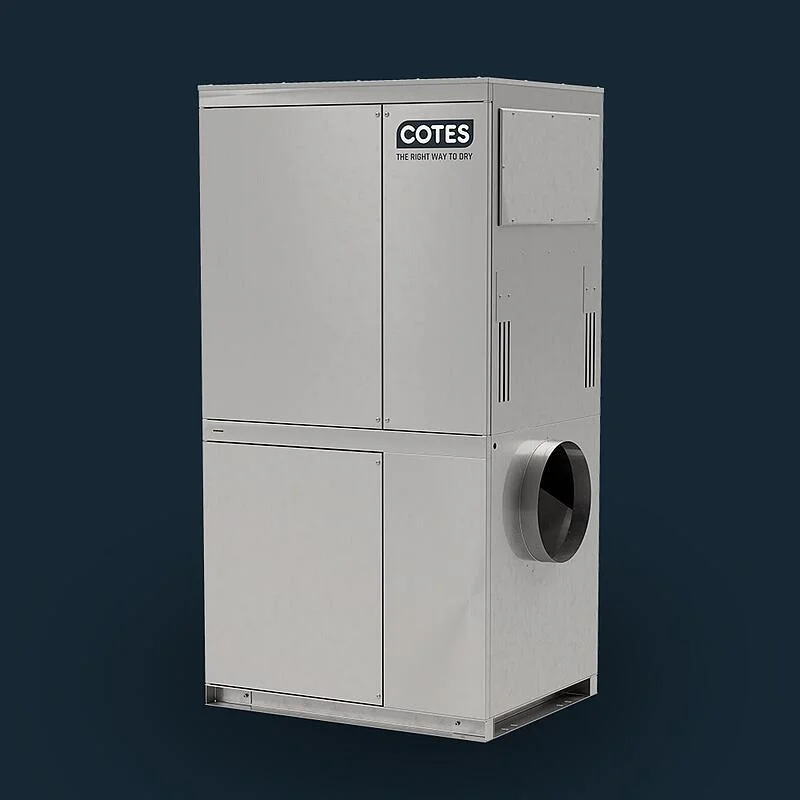
CWO65

Wind Overpressure dehumidifier for offshore wind turbines

The CWO65 is part of the Cotes Wind Overpressure (CWO) product family — adsorption-based climate control systems developed specifically for offshore wind turbines and offshore energy infrastructure.

The unit operates using the Cotes Wind Overpressure principle, combining controlled overpressure, filtration, adsorption drying and desalting.

Unlike conventional dehumidification systems that continuously attempt to dry incoming air, the CWO concept focuses first on limiting how much humid and salt-laden marine air can enter the structure.

By maintaining a controlled internal overpressure, the CWO65 reduces the amount of external air entering the turbine tower. This means the system primarily stabilises and improves the internal air column, rather than continuously drying new incoming air.

As a result, the drying demand is reduced while humidity levels and salt contamination inside the structure are stabilised.

At the same time, the system continuously dries and desalts the internal air, helping protect electrical systems, structural components and internal equipment from corrosion and condensation-related damage.

Explanation of Naming

The product designation follows Cotes naming logic:

  • C – Cotes adsorption-based climate solution platform
  • W – Wind industry application
  • O – Overpressure operating principle
  • 65 – Capacity class within the CWO product family

The CWO designation identifies systems designed to combine pressure control, filtration, adsorption drying and desalting.

Position within the Cotes Wind Overpressure family

The CWO65 represents the highest-capacity system within the Wind Overpressure range.

The CWO family consists of:

  • CWO26 – compact offshore tower climate control system
  • CWO35 – mid-capacity offshore tower system
  • CWO65 – high-capacity system for larger tower volumes and higher air exchange environments

All units apply the same Cotes Wind Overpressure strategy, combining:

  • controlled internal overpressure
  • filtration of incoming air
  • adsorption drying
  • desalting of the internal air column

Unlike onshore retrofit solutions such as the Cotes Mobile Wind family, CWO systems are typically integrated into offshore turbine towers and offshore energy infrastructure during design.

Read more + Read less -
Controlled overpressure strategy: Maintains a slight internal overpressure inside the turbine tower, limiting the ingress of humid and salt-laden marine air.
Salt ingress reduction and desalting: Incoming make-up air is filtered while the internal air column is progressively dried and desalted, reducing salt contamination inside the structure.
Adsorption drying technology: Rotor-based adsorption removes moisture from the internal air volume and stabilises humidity levels under varying offshore conditions.
Marine environment design: Developed specifically for wind turbines exposed to humidity, salt aerosol and pressure fluctuations in offshore environments.
Reduced drying load: By limiting external air ingress, the system reduces the amount of humid air that must be continuously dried.
Designed for larger tower volumes: The CWO65 provides the highest capacity within the Wind Overpressure family, suitable for large offshore turbine towers and higher air exchange environments.
Request a quote

TECHNICAL DATA

Model DRY AIR (M3/H) REGENERATION AIR (M3/H) CONNECTED LOAD (kW) MOISTURE REMOVAL CAPACITY (KG/H) DIMENSIONS (WxDxH) DATASHEET PRODUCT MANUAL
CWO26 80 40 1,2 N/A 484 / 333 / 840 Datasheet
Request Manual
CWO35 300 150 5,3 N/A 624 / 454 / 1328 Datasheet
Request Manual
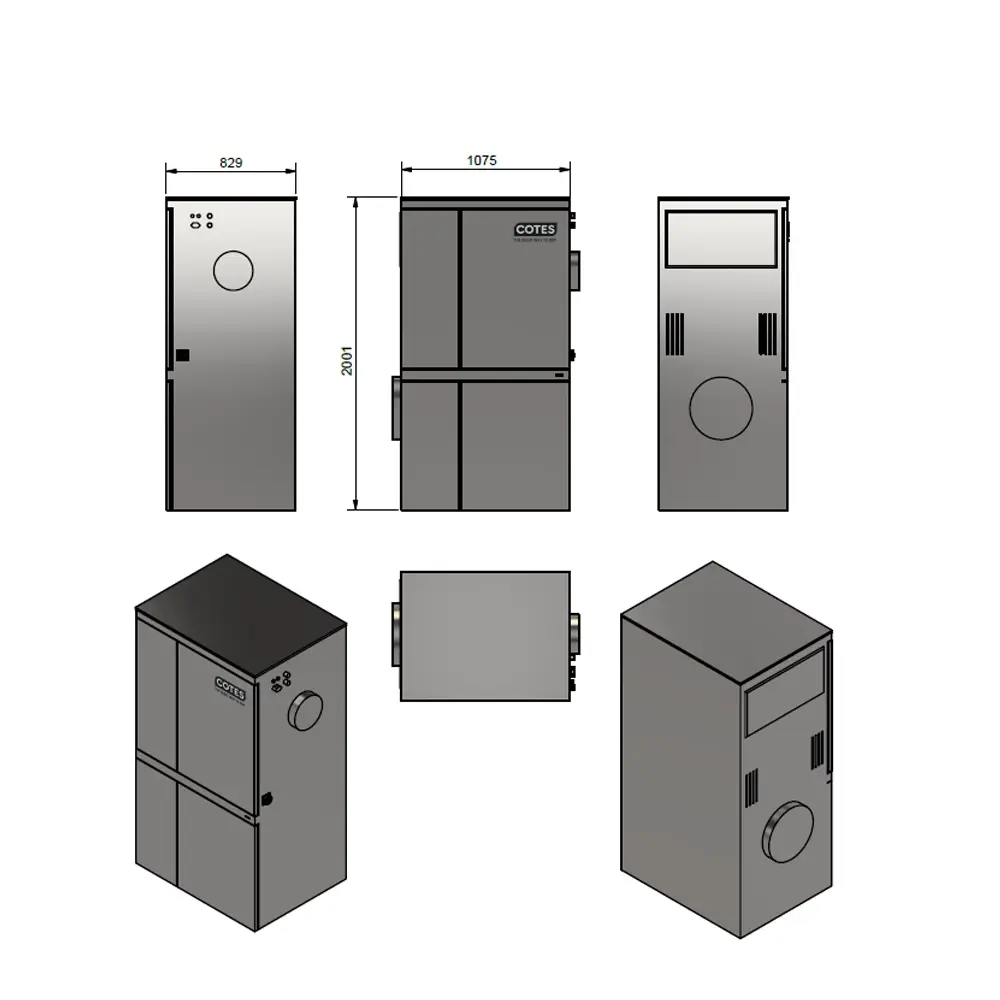
CWO65 1000 500 15,7 N/A 1075 / 829 / 2001 Datasheet
Request Manual
check

PATENTED OVERPRESSURE PRINCIPLE

Maintains controlled internal pressure to reduce uncontrolled ingress of humid and salt-laden marine air.

check

 APPLICATION KNOW-HOW

 Developed specifically for wind turbines operating in offshore environments exposed to humidity, salt aerosol and pressure fluctuations. 

check
ADSORPTION DRYING PRINCIPLE

By filtering incoming air and continuously drying the internal air column, the system progressively reduces salt contamination inside the structure.

check
DESALTING FUNCTION

By filtering incoming air and continuously drying the internal air column, the system progressively reduces salt contamination inside the structure. 

Frequently Asked Questions

For our full FAQ section you can go to www.cotes.com/FAQ 

On this page we highlight some of the more frequently asked questions from customers.


Why is dry air capacity less critical in CWO systems?
open close

Traditional dehumidification systems must continuously treat incoming humid air. In offshore environments this results in a large and constant drying load.

The Wind Overpressure strategy instead limits how much external air enters the structure. By maintaining a slight internal overpressure, the ingress of humid and salt-laden air is reduced.

Because less external air enters the tower, the system primarily stabilises and dries the internal air column rather than continuously treating new air.

Salt particles enter turbines through ventilation, pressure differences and service access. Combined with humidity, salt accelerates corrosion and electrical failures.

The CWO system progressively removes salt from the internal air column while limiting additional salt ingress.

CWO systems were originally developed for offshore wind turbines, where humidity and salt exposure are constant and environmental conditions are particularly aggressive.

However, similar conditions can also occur in coastal or nearshore onshore turbines, where waves and strong coastal winds inject salt aerosol into the air. In these environments, salt-laden humidity can enter the turbine through ventilation openings, service access and pressure differences.

In such cases, the desalting and humidity stabilisation capabilities of the CWO concept can also be relevant.

For inland onshore turbines without significant salt exposure, other solutions such as Cotes Mobile Wind systems are typically sufficient.