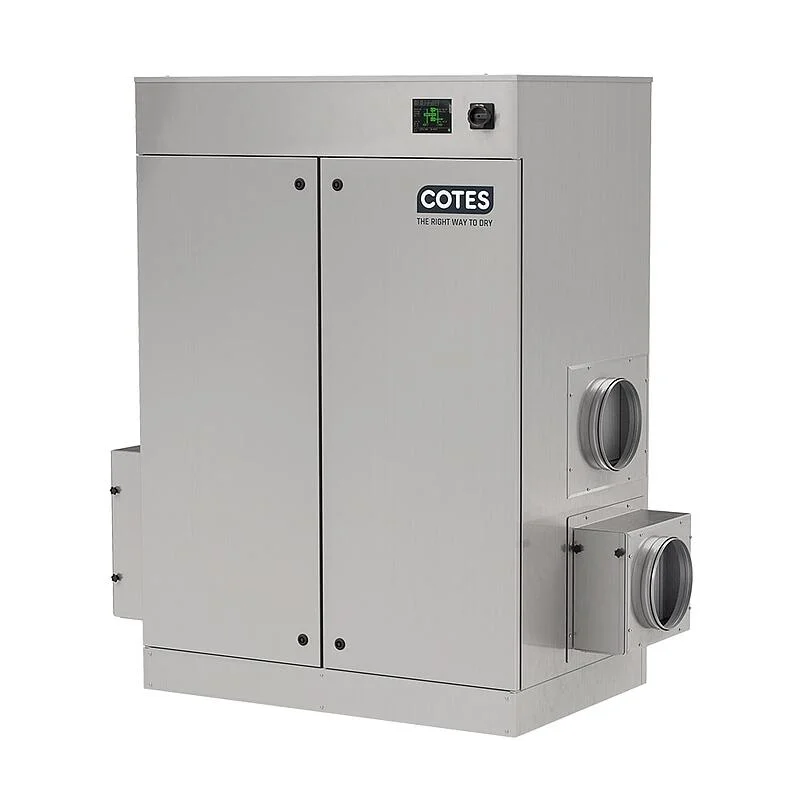
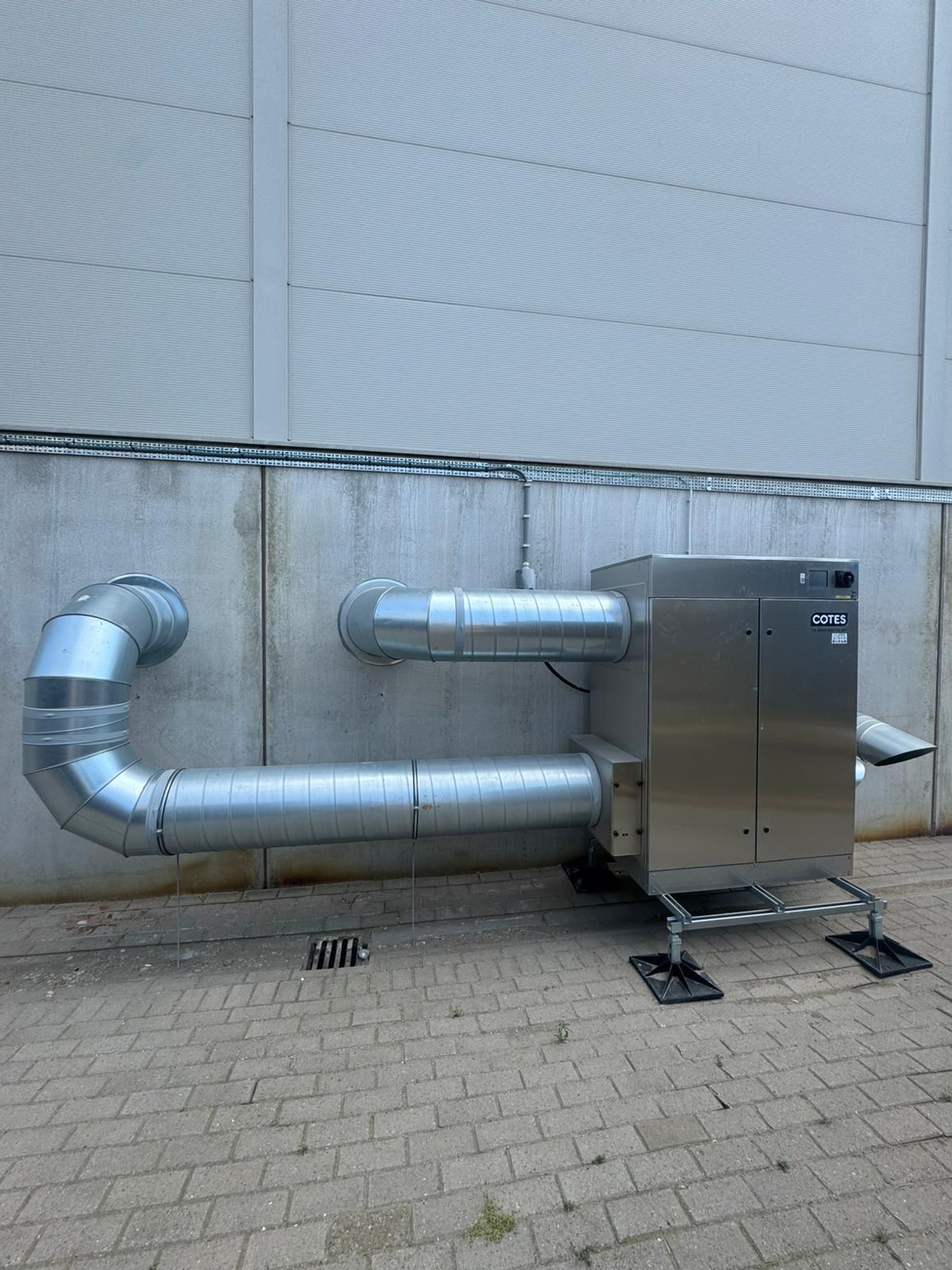
Product Images Website C65-min
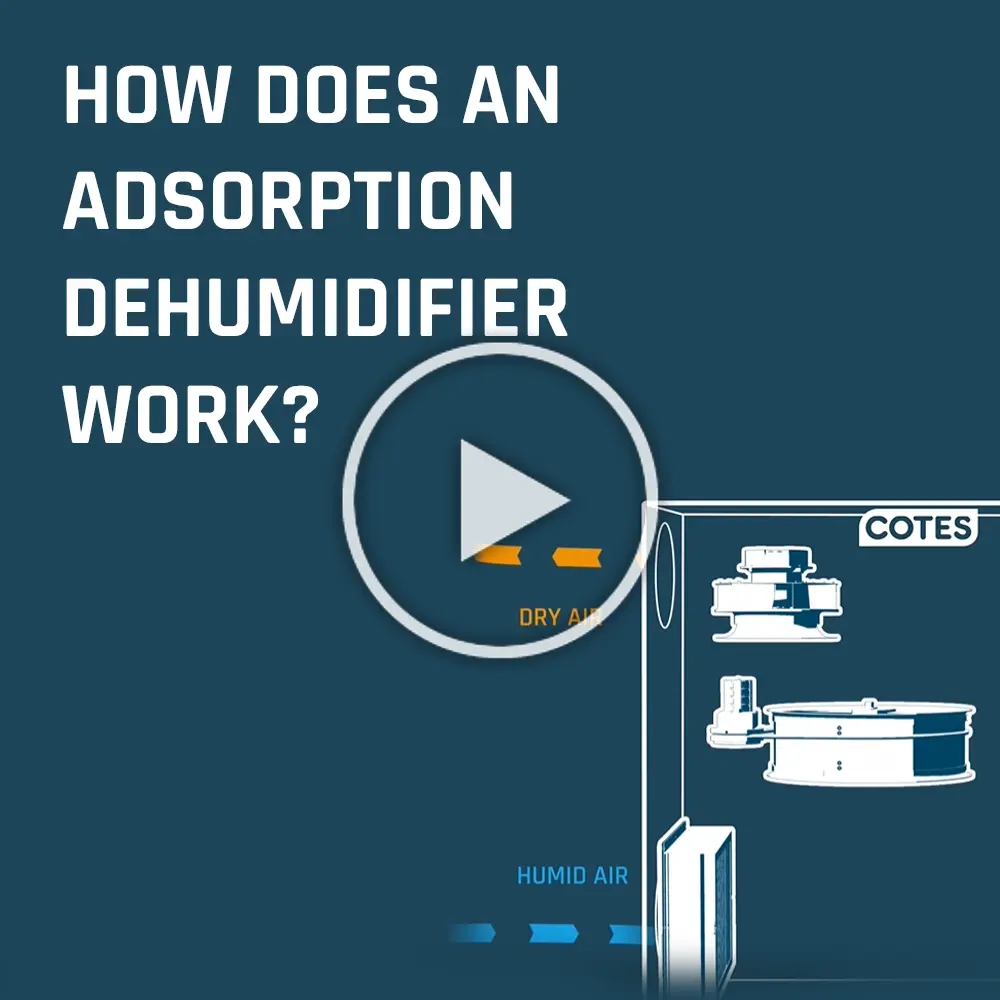
How does an adsorption Dehumidifier work
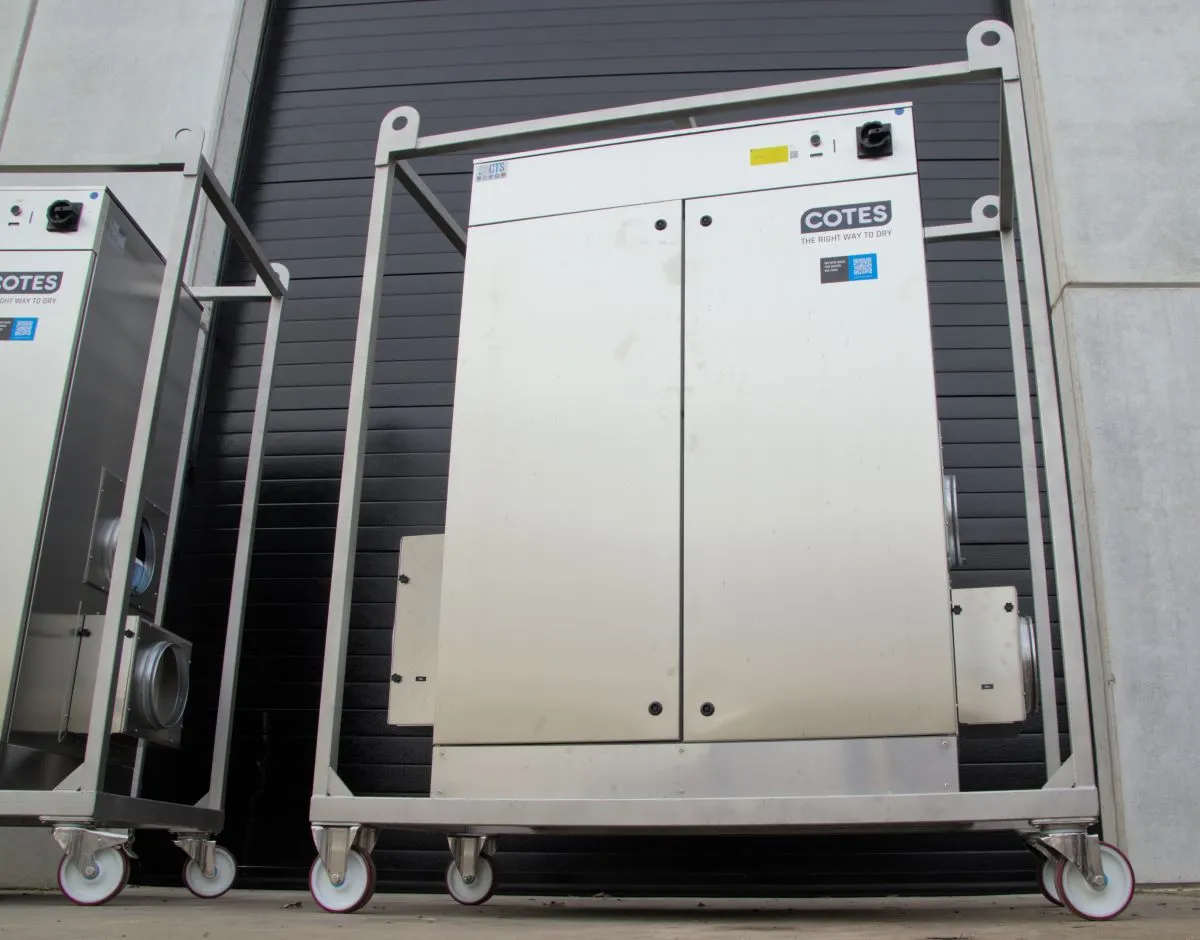
OI_CTS-C65-Mobile_02_20240125-min
Product Images Website C65-min
How does an adsorption Dehumidifier work
OI_CTS-C65-Mobile_02_20240125-min
Cotes Modular

C65E

Electric adsorption dehumidifier with integrated heat recovery

The C65E is part of the Cotes Modular family — a platform of standardized, configurable adsorption dehumidifiers for industrial and commercial humidity control.

It combines electric regeneration with integrated heat recovery. By reusing heat from the regeneration exhaust air, the unit reduces the required electrical heater input compared to conventional electric regeneration systems without heat exchange.

Position within the Cotes Modular family

The C65E is part of the Cotes Modular platform and shares the same overall cabinet architecture, airflow principle and engineering logic as other Modular units.

However, the C65E differs in one fundamental aspect:
The heat recovery system is fully integrated into the unit design.

In other Modular models, heat recovery and certain functional extensions are implemented as add-on modules. In the C65E, the air-to-air heat exchanger is built into the core unit construction.

Practical consequence:

  • The C65E is delivered as a defined configuration
  • It does not use the same external module expansion concept as other Modular variants
  • Heat recovery is always part of the unit design, not an optional add-on

This makes the C65E a specialised variant within the Modular family — maintaining platform consistency while offering a fixed, integrated heat recovery solution.

Read more + Read less -
Integrated air-to-air heat exchanger: Reduces electrical heater demand by preheating regeneration air.
Electric regeneration system: Suitable for sites where gas or steam is not available or not desired.
Service-oriented layout: Access to key components is arranged to support inspection and maintenance.
Configurable airflow and pressure options: Allows adaptation to system requirements within the model’s defined performance range.
Request a quote

TECHNICAL DATA

Model DRY AIR (M3/H) REGENERATION AIR (M3/H) CONNECTED LOAD (kW) MOISTURE REMOVAL CAPACITY (KG/H) DIMENSIONS (WxDxH) DATASHEET PRODUCT MANUAL
C30E 300 50 / 85 1,4 / 2,9 0,9 / 1,9 554 / 398 / 771 Datasheet
Request Manual
C35E 750 / 1000 135 / 233 5,1 / 8,8 3,3 / 5,6 756 / 493 / 1090 Datasheet
Request Manual
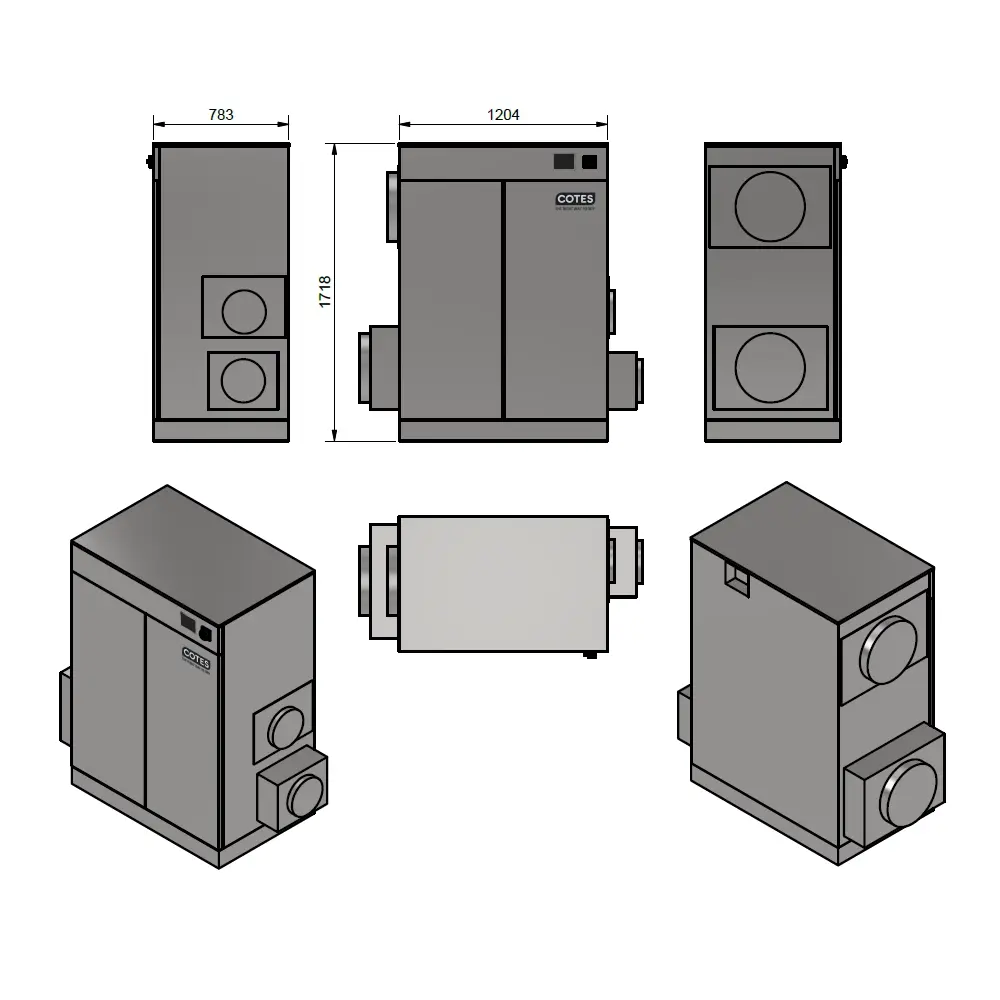
C65E 1900 / 3700 340 / 940 11,4 / 33,8 8 / 19 1200 / 779 / 1718 Datasheet
Request Manual
C105E 4100 / 8800 1100 / 1900 38 / 75 25 / 51 1803 / 1320 / 2150 Datasheet
Request Manual
check
INDUSTRIAL OPERATION

Designed for continuous use in technical and process environments, with cabinet construction and component layout suited for industrial installation and service access.

check
APPLICATION KNOW-HOW

Developed based on experience from industrial humidity control across HVAC, storage and process applications, with focus on stable and predictable operation.

check
ENERGY CONSCIOUS

Optimised airflow, rotor technology and regeneration control are applied to balance drying performance and electrical consumption under defined operating conditions.

check
PLATFORM-BASED DESIGN

Shares the cabinet and system architecture of the Cotes Modular family, while integrating heat recovery directly into the unit construction. 

Frequently Asked Questions

For our full FAQ section you can go to www.cotes.com/FAQ 

On this page we highlight some of the more frequently asked questions from customers.

What makes the C65E different from other Modular units?
open close

The C65E is part of the Cotes Modular platform but differs in one key aspect:
The heat recovery system is integrated directly into the unit design.

In other Modular models, heat recovery can be implemented as an add-on module. In the C65E, the air-to-air heat exchanger is built into the core construction. This means the unit is delivered as a defined configuration where heat recovery is always included.

The built-in air-to-air heat exchanger transfers heat from the regeneration exhaust air to the incoming regeneration air.

This reduces the required electrical heater input compared to electric regeneration systems without heat recovery. The practical benefit depends on operating conditions but typically results in lower installed heater capacity and reduced electrical consumption.

The C65E follows the overall Modular platform design but does not use the same external module expansion concept for heat recovery.

Since the heat exchanger is integrated, the configuration is more defined compared to other Modular units where certain functions can be added as separate modules. Other configuration options within the model’s engineered limits may still apply

Key parameters should be defined before selection:

  • Required dry air capacity at specified temperature and humidity conditions
  • Airflow and external pressure requirements
  • Available electrical infrastructure
  • Installation environment and service access

Performance and energy consumption should always be evaluated at documented reference conditions.