










Protect Wind Turbines from Humidity, Condensation and Corrosion
Wind turbines are exposed to changing environmental conditions from the moment they leave the production floor. Whether onshore, nearshore or offshore, changes in temperature and humidity can create conditions for condensation, corrosion and electrical instability. In coastal and offshore environments, salt contamination further increases the risk.
Cotes has more than 20 years of experience controlling humidity inside wind turbines. Our dry-air solutions help create and maintain controlled internal conditions throughout the turbine lifecycle — from transportation and storage to installation, operation and retrofit.
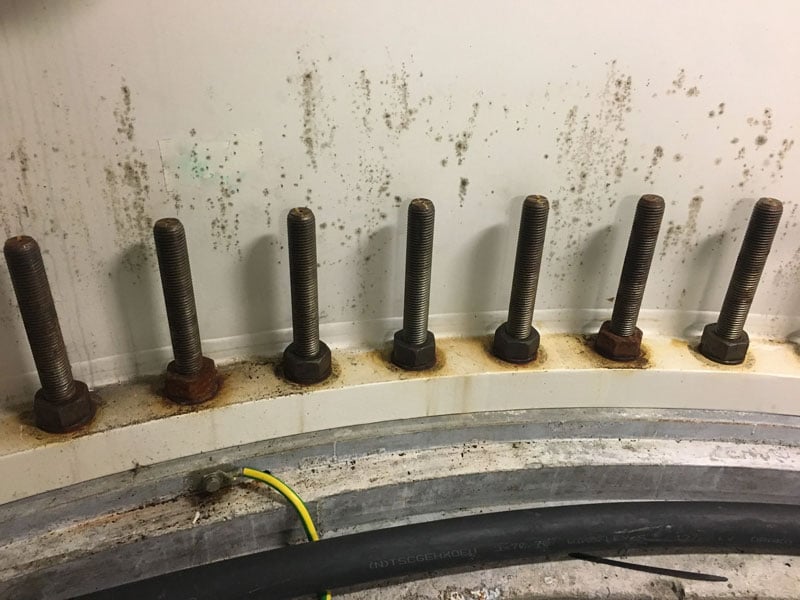
Ensure wind turbine reliability, longevity and lower maintenance
Humidity-related risks can develop long before visible condensation or corrosion appears.
As temperatures change inside a turbine, relative humidity changes as well. When surfaces cool below the dew point of the surrounding air, condensation can form.
In contaminated environments, humidity can activate salt deposits and create conductive moisture films that accelerate corrosion and increase the risk of electrical faults.
These mechanisms can contribute to:
- Corrosion of structural and electrical components
- Reduced insulation resistance
- Electrical leakage currents
- Control system instability
- Increased maintenance requirements
- Reduced turbine availability
The challenge is not simply moisture. It is the interaction between moisture, temperature, contamination and time — and the internal conditions this creates around critical turbine components.
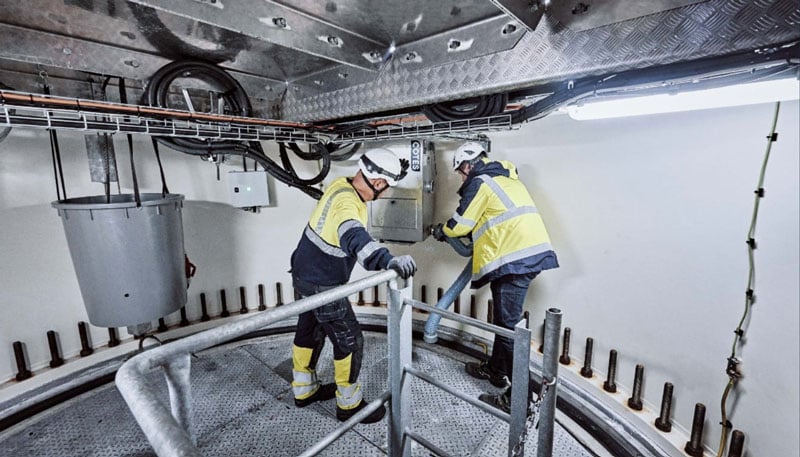

Airborne moisture and salt cause big problems
Nearshore turbines can combine the environmental challenges of both onshore and offshore wind. High humidity, temperature variation and airborne salt can create conditions for condensation and contamination inside towers, nacelles and electrical equipment.
Salt deposited on internal surfaces absorbs moisture as humidity rises. This can create conductive electrolyte films that accelerate corrosion and increase the risk of electrical leakage and instability.
Controlling the internal moisture level therefore helps prevent the conditions that allow salt contamination to become an active reliability risk.
Refined over many years of collaboration and experience
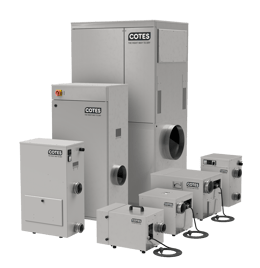
The right way to dry wind turbines
Humidity control can be relevant throughout the turbine lifecycle — from transportation and storage to installation, operation, service and retrofit. Cotes provides dedicated Wind solutions for both permanent environmental control and temporary drying.
Wind turbines operate as dynamic climate systems, with internal conditions continuously influenced by the surrounding environment.
They experience:
- Daily temperature fluctuations
- Seasonal weather changes
- Pressure differentials
- Continuous air exchange
- Remote operating conditions
- Limited maintenance access
As ambient conditions and pressure differences change, outside air can enter through openings and leakage paths, carrying moisture and — in coastal and offshore environments — salt contamination into the turbine.
Combined with internal temperature changes, these conditions can lead to condensation, corrosion and electrical instability over time.