Humidity control is crucial in ice arenas, where condensation and fog can compromise not only the structure of the building but also the viewing experience of the audience. The St. Leonhard Ice Rink in Fribourg, home to the HC Fribourg-Gottéron ice hockey team, faced such challenges – but found the ideal solution through a partnership between Krüger + Co. AG and Cotes.
Why Humidity Control Matters in Ice Arenas
Maintaining proper humidity levels in an ice arena is about much more than comfort – it’s a matter of safety, efficiency, and experience.
- Condensation prevention: When warm, humid air from outside enters the cold environment of an ice rink, condensation can form on the ceiling, walls, or even drip onto the ice surface. This not only disrupts the quality of the ice but poses a safety hazard for players and increases the risk of long-term structural damage.
- Fog elimination: Excess humidity can cause fog to form inside the arena, significantly reducing visibility for spectators and players alike – not ideal when you’re trying to follow the puck during a high-stakes hockey match.
- Structural protection: Over time, excessive humidity can damage the building’s construction materials, resulting in costly repairs and potential downtime.
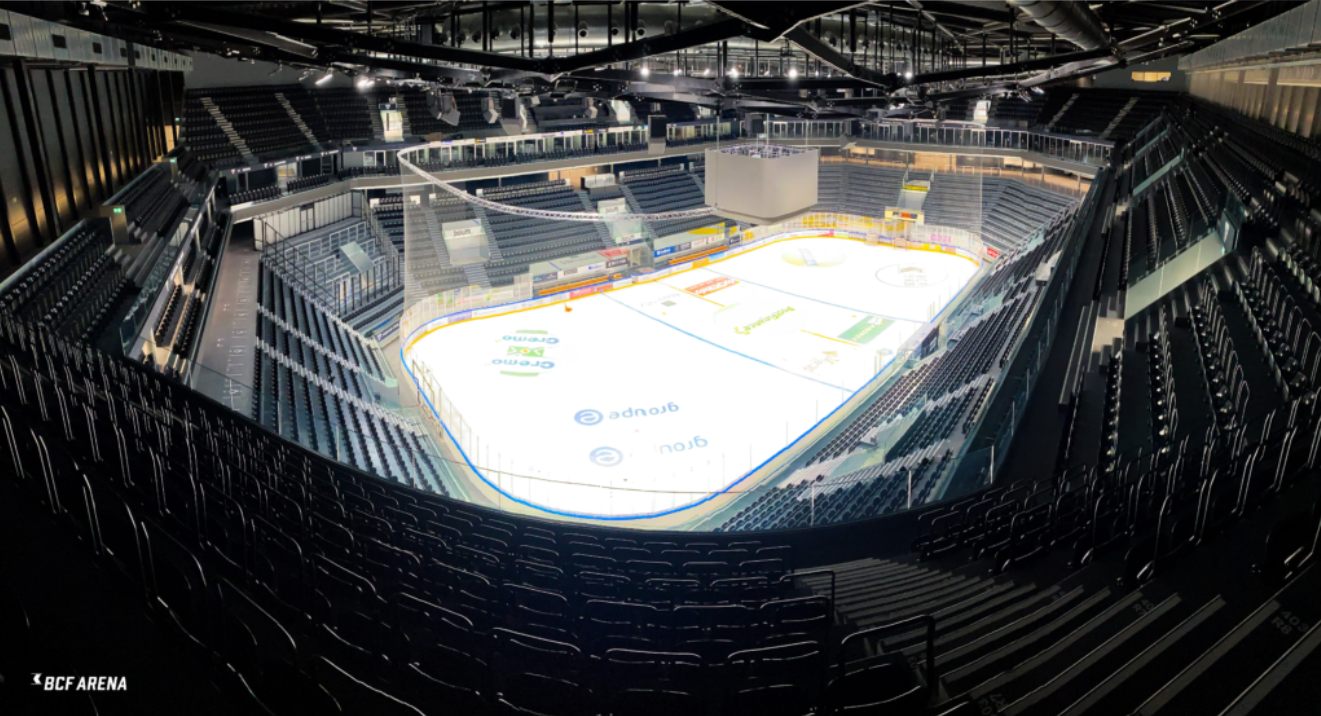
Case Story: St. Leonhard Ice Rink, Fribourg
To combat these issues, the engineering team responsible for the ice rink contacted Krüger + Co. AG, a trusted Cotes Partner in Switzerland. After an in-depth site assessment, the solution was clear: an advanced dry-air system built around a powerful adsorption dehumidifier capable of handling large volumes of air under challenging temperature conditions.
The Right Solution for Large-Scale Spaces
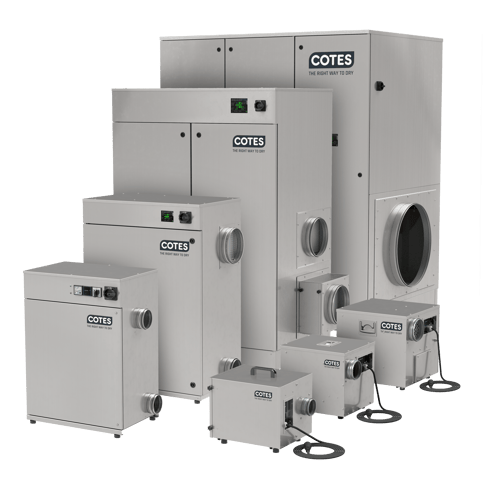
At the core of the installation is a Cotes C180 (Standard Flexible) – one of the largest adsorption dehumidifiers available, designed specifically for large-volume spaces like ice arenas. With an air handling capacity of 25,000 m³/h, this unit ensures consistent humidity control even when external weather conditions fluctuate dramatically. .png?width=468&height=468&name=OI_Product_Flexible_20210609%20(3).png)
In addition to the main unit, several smart modules were implemented to improve both efficiency and environmental performance:
- Pre-heating using waste heat: The system makes use of excess heat generated by the ice machine, lowering energy consumption by pre-warming the regeneration air.
- Heat recovery system: This recaptures warmth from the exhaust air stream, further reducing the gas usage of the dehumidifier by approximately 25%.
- Post-cooling module: To ensure that the dry air does not inadvertently warm the rink area, a post-cooling unit cools down the outgoing dry air, maintaining the desired internal temperature.
These additions demonstrate how tailored engineering can deliver both optimal performance and sustainability in demanding environments.
Why the C180 (Standard Flexible) is Ideal for Ice Arenas
The Cotes C180 (Standard Flexible) stands out for its:
- High capacity and reliability under low temperatures
- Compatibility with heat recovery and other eco-friendly modules
- Minimal maintenance requirements and long service life
This project in Fribourg is a great example of how Cotes technology – combined with the local expertise of a trusted partner like Krüger + Co. AG – can ensure clear visibility, ice quality, and structural protection, all while reducing operating costs.
Do you manage an ice arena or a large indoor facility affected by humidity?
If you’re facing challenges with condensation, fog, or air quality, get in touch with a Cotes Partner in your region to explore a custom-tailored dry-air strategy.